DEA Missed Deadline for Opioid Production Quotas. Will It Worsen Shortages?

By Pat Anson

In recent years, hundreds of physicians have been prosecuted by the U.S. Justice Department for violations of the Controlled Substances Act (CSA).

In many cases, the doctors were accused of prescribing opioid pain medication without “a legitimate medical purpose” – a vague term in the CSA that was meant to prevent drug abuse, but in practice put the DOJ in charge of deciding whether healthcare decisions involving controlled substances are legal. 

The CSA is rigidly enforced when federal prosecutors believe opioids are prescribed excessively. But when it comes to enforcing another provision in the CSA, the DOJ and Drug Enforcement Administration have routinely ignored deadlines for setting aggregate production quotas (APQs) for opioids and other Schedule I and II controlled substances:

“On or before December 1 of each year, upon application therefor by a registered manufacturer, the Attorney General shall fix a manufacturing quota for the basic classes of controlled substances in schedules I and II.”

The December 1 deadline is important because it gives the pharmaceutical industry a small window to prepare for the coming year by acquiring raw materials for drugs, setting manufacturing schedules, and distributing medications to hospitals and pharmacies – a process that can take as long as six months. . 

But Attorney General Pam Bondi and acting DEA Administrator Terry Cole didn't publish their proposed quotas for 2026 in the Federal Register until November 28, which call for a 6% cut in the supply of oxycodone.

Allowing for a shortened public comment period that ends December 15, and time to review thousands of comments and make changes in the quota allotments, that means the final APQs for next year will likely not be ready until after January 1.

The last time production quotas were that late was in 2024, when the final APQs were not published until January 3. Drug shortages spiked to record levels in the first few months of that year, including many medications that are covered under the quota system. 

Missing the deadline again this year threatens to worsen chronic shortages of oxycodone, hydrocodone, fentanyl, hydromorphone, morphine and amphetamine-based stimulants that are vital to millions of patients who live with pain or attention deficit disorder (ADHD).

The DOJ and DEA did not respond to multiple requests from PNN to explain why the CSA deadline was missed again.

This is not a new problem. Late quotas and drug shortages have persisted for years, as the DOJ and DEA have focused on going after doctors who prescribe opioids – at times using “flimsy evidence” – rather than ensuring that essential medications are available on time. 

That mindset of being a law enforcement agency first – with maintaining the drug supply an afterthought – may have cost some patients their lives. 

“We talk a lot about opioid misuse, but almost never about the quiet suffering caused when essential pain medicines simply aren't available,” says Lynn Webster, MD, a pain management expert and former president of the American Academy of Pain Medicine. “Chronic delay and rigidity in quota decisions make patients with serious illness feel like collateral damage in a war on drugs that has lost sight of its humanitarian obligations.

“Quotas were meant to curb diversion, not to create a permanent state of scarcity for people in pain. By keeping quotas tight and decisions late, the DEA has turned an already fragile supply chain into a game of musical chairs where patients lose their seats.”

Late Quotas Worsened Drug Shortages

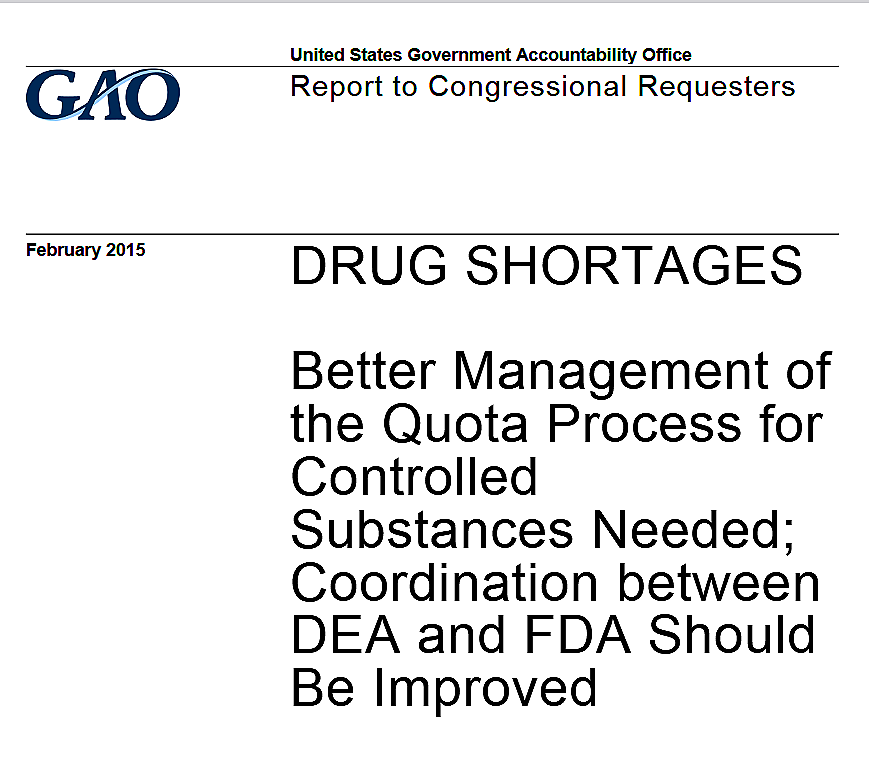
As far back as 2015, the General Accountability Office (GAO) warned in an audit report that the DEA “has not effectively administered the quota process.” Although a decade old, many of the problems cited by the GAO still exist today.

“Each year, manufacturers apply to DEA for quota needed to make their drugs. DEA, however, has not responded to them within the time frames required by its regulations for any year from 2001 through 2014,” the GAO said.

“Manufacturers who reported quota-related shortages cited late quota decisions as causing or exacerbating shortages of their drugs.”

The report found that drugs containing Schedule II controlled substances accounted for over half the shortages between 2001 and 2013. Several manufacturers complained to the FDA the shortages were caused by the DEA’s mishandling of the quota system.
But the DEA denied any responsibility for the shortages, while blaming the missed deadlines on  “inadequate staffing” and an “increasing workload” in its Quota Unit.

“DEA is confident that its administration of the quota process did not affect a shortage during the period of review because drug product shortages are not limited to products that contain Schedule II controlled. substances,” Joseph Rannazzisi, then-DEA Deputy Assistant Administrator, wrote in the agency’s response to the GAO report.

Rannazzisi would later emerge as a “whistleblower” on 60 Minutes, who blamed the opioid crisis on lax policies at the FDA that favored that drug industry.

The relationship between DEA and FDA, at least in 2015, was not one of trust. The FDA advised the DEA about medical demand for Schedule II drugs and any shortages that may exist, but the DEA didn’t always listen.

“DEA and FDA are not able to effectively collaborate due to fundamental disagreement over whether any given shortage exists. DEA has made it clear it does not trust FDA’s information, as it does not consider many of the shortages that FDA verifies to be legitimate,” the GAO said. “They do not believe FDA appropriately validates or investigates the shortages.” 

The GAO concluded that problems in DEA’s Quota Unit run deeper than any petty rivalries with the FDA. 

“Our work shows that DEA’s lack of internal controls, such as controls to ensure data reliability, performance measures, and monitoring of performance, may hinder the agency’s ability to ensure an adequate and uninterrupted supply of controlled substances,” the 2015 report found. “This approach to the management of an important process is untenable and poses a risk to public health.”

New Deadline

The GAO’s critique came at a time when the DEA’s deadline for final APQs was October 1 – a deadline the agency consistently failed to meet. 

To buy itself more time to work on quotas, the DEA lobbied Congress to change the annual deadline to December 1 in the 2018 Support Act, a bill intended to reduce opioid diversion. The DEA also reduced the amount of inventory drug manufacturers are allowed to keep of controlled substances, and agreed to base its quotas on dosages, not the raw supply of drugs.

How has that worked out? Poorly.

The DEA has not only been unable to meet the December 1 deadline, but the smaller inventories have worsened the ability of drug manufacturers to respond to late quotas and emerging drug shortages. 

The pharmaceutical industry warned the DEA that reducing inventories would only worsen shortages and do little to prevent diversion.

“We believe that risks associated with this proposal, including the increased likelihood for drug shortages and market outages, greatly outweigh the negligible benefit this provision will provide,” Larry Cote, an attorney representing a drug manufacturer, wrote to the agency in 2019.

“Given the timing of procurement quota issuance, it will become more imperative to carry increased levels of inventory at year end in order to ensure continued drug supply, as opposed to decreased levels.”

The DEA ignored those warnings and reduced inventories anyway. As a result, analgesic medications needed for surgery and post-op care, such as injectable fentanyl and hydromorphone, have been on the FDA shortage list for years, in part due to low inventories. The two drugs are rarely diverted.

‘Vulnerable to Supply Shocks’

Two pharmacists recently criticized the DEA for its “outdated system” for APQs.

“The current one-size-fits-all system for setting APQs is ineffective and Congress recognized this back in 2018, passing the SUPPORT Act to modernize the APQ setting process and require quota allocations based on dosage form. Yet seven years later, the DEA has failed to implement this law, leaving manufacturers constrained, patients underserved, and the nation vulnerable to supply shocks,” Soumi Saha, PharmD, and Justin Schneider, PharmD, wrote in a recent op/ed published in the Pharmacy Times.   

Saha and Schneider believe many of the quota problems could be addressed if the DEA were to hire a Chief Pharmacy Officer who is familiar with the drug supply system and is put in charge of the quota system.

“It is time to elevate the agency’s clinical responsibility by establishing a Chief Pharmacy Officer (CPO) within the DEA - a role dedicated to ensuring that patient access is not an afterthought, but a core priority,” they said. “A strong CPO would not only modernize quota systems but also bring agility, accountability and patient advocacy to the heart of DEA decision-making.”

To be clear, the DEA is not solely at fault for persistent shortages of opioids and other controlled substances. A 2021 opioid litigation settlement with three drug distributors essentially rationed the supply of opioids at many pharmacies and made pharmacists even more wary of filling new prescriptions. 

In a 2023 PNN survey of over 2,800 patients, 90% said they experienced delays or problems getting their opioid prescriptions filled, mostly because their pharmacy was out of stock. Nearly one in five were unable to get their pain medication, even after contacting multiple pharmacies.

Some generic drug manufacturers have stopped making opioids because of low profit margins and because of concerns they could be targeted by plaintiff law firms in opioid lawsuits that could cost them billions of dollars. 

Bad weather and a heavy reliance on foreign drug manufacturers have also made the supply chain less reliable and contributed to shortages.  

But the DEA’s chronic failure to meet quota deadlines – a problem dating back decades – and its slow-walking of efforts at reforming the quota system, have made a fragile drug supply chain even more vulnerable to disruptions. And it is patients who pay the ultimate price for the DEA’s negligence.

“When DEA repeatedly misses its own deadlines for setting opioid production quotas, that uncertainty reverberates all the way to the bedside,” says Dr. Webster. “Manufacturers pull back, pharmacies ration, and it's the patients – people with cancer, sickle cell disease, or severe chronic pain – who are left wondering if their next prescription will even be filled.” 

Should the DEA hire a Chief Pharmacy Officer? Should deciding what is or isn’t “a legitimate medical purpose” be left to the DEA and DOJ? Only a few days are left to comment on the DEA’s proposed APQs for 2026. You can leave a public comment by clicking here.
Feds Target Large 7-OH Vendor  

By Pat Anson

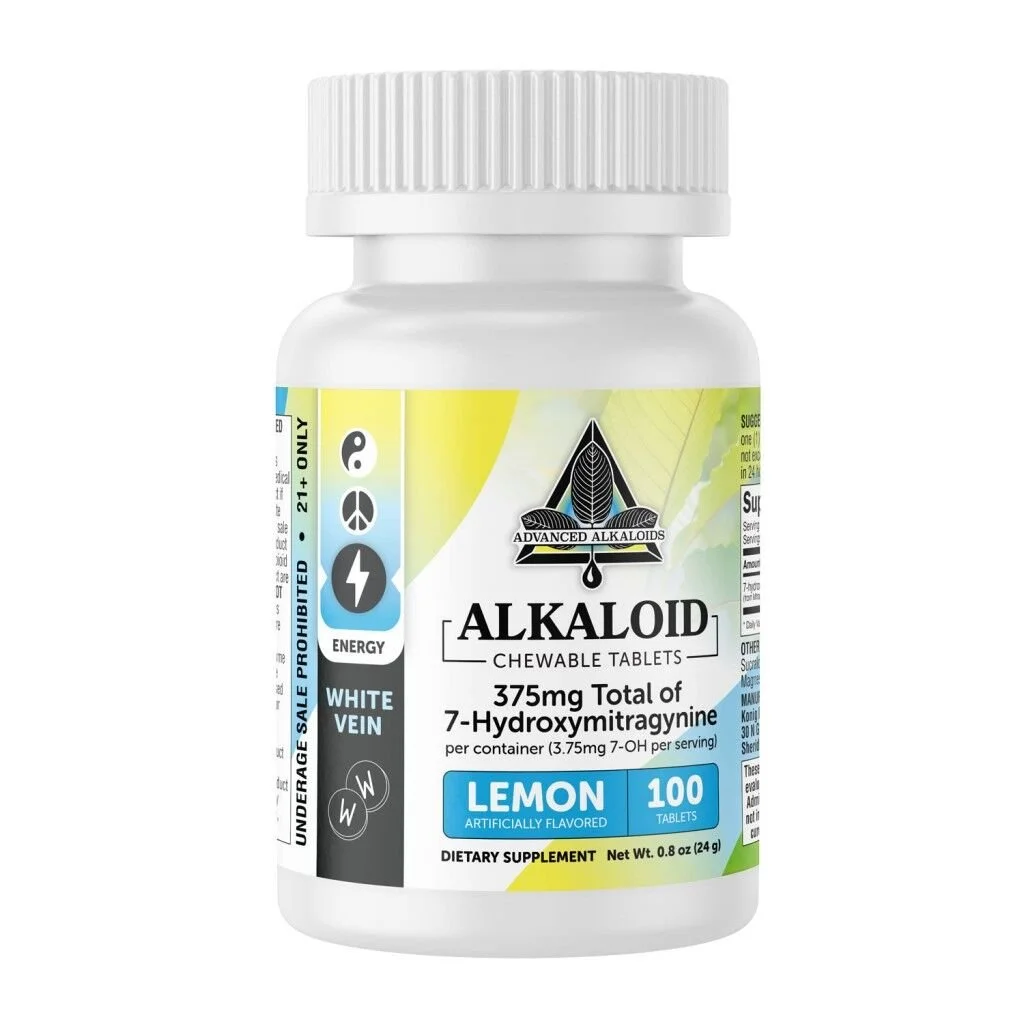
Federal agents have seized about 73-thousand tablets, gummies, shots and other products containing 7-hydroxymitragynine (7-OH) from a Missouri company that sells 7-OH products nationwide. The seized items have an estimated value of about $1 million.

The seizure is part of a growing effort by federal and state regulators to crackdown on sales of 7-OH, an alkaloid that occurs naturally in kratom. When concentrated, 7-OH has opioid-like effects that can relieve pain and boost energy levels. Health officials say 7-OH can be abused and is addictive, although they have offered little evidence to support those claims.

“This enforcement action is a strong step to protect Americans from the dangers of concentrated 7-OH products, which are potent opioids,” FDA Commissioner Marty Makary, MD, said in a press release.  “We must be proactive and vigilant to address emerging threats to our communities and our kids.”

To be clear, 7-OH and kratom are not opioids. But they act on nerve receptors in the brain that control pain and mood, as do many other non-opioid substances, such as coffee and chocolate. Kratom and its alkaloids also don’t cause respiratory depression, the leading cause of an overdose.

The FDA worked with the Missouri Department of Health in targeting Kansas City-based CBD American Shaman, a company that was the subject of a recent investigative series by the Kansas City Star. American Shaman sells its kratom, CBD and hemp-based Delta-8 products online and in hundreds of smoke shops, gas stations and retail stores around the country.

Missouri’s Health Department released a health advisory in October claiming 7-OH was 13 times more potent than morphine, and could cause poisoning and overdose. The advisory noted the Missouri Poison Center was aware of three cases involving 7-OH, including one person who was “evaluated in a health care facility.”

The FDA’s Adverse Events Reporting System lists 52 “serious cases” associated with 7-OH so far this year, including 6 deaths. Most of the adverse effects were for dependence or withdrawal symptoms.

Warning Letters 

The FDA sent a warning letter to Shaman Botanicals, a subsidiary of American Shaman, last summer accusing it of illegally selling 7-OH in adulterated dietary supplements. Warning letters were also sent to six other companies selling 7-OH products. In response, some removed the 7-OH products from their websites, while others kept right on selling them.   

American Shaman currently still offers 7-OH tablets on its website, saying the tablets provide “relief, relaxation, and focus.” Asked if the tablets are safe, a chat bot gave us this answer:

“Great question! Our Advanced Alkoloids tablets feature precise, lab-tested 7-hydroxymitragynine (7-OH) or mitragynine pseudoindoxyl, depending on the variety. Many customers appreciate their reliable effects and controlled dosing compared to traditional kratom products.

As with any supplement, it’s a good idea to consult with your doctor before starting – especially if you have health concerns or take other medications.”

A disclaimer on the website also warns consumers not to use the tablets if they are taking pain relievers, opioids or other medications, and not to take them daily or for prolonged periods.

CBD AMERICAN SHAMAN

The FDA has recommended to the DEA that it classify 7-OH as a Schedule I controlled substance, which would make it illegal to sell or possess. The FDA says it is not focused on banning natural kratom leaf products, although some state and local governments have already banned kratom sales. 

The DEA has yet to act on the FDA’s request, a process that could take several months once a proposed scheduling is posted in the Federal Register. Kratom and 7-OH are not even mentioned in the DEA’s 2025 National Drug Threat Assessment, an annual report on the production and distribution of illicit drugs in the United States.

A Beginner’s Guide to Using Kratom for Pain Relief

By Crystal Lindell

Whenever I meet someone who’s having trouble managing their chronic pain, I always suggest that they look into kratom. However, many soon realize that there’s not much trustworthy information out there about what kratom is and how to use it. 

I’ve been taking kratom for my own chronic pain since 2018, and I have found that it’s the only thing sold over the counter that actually helps me. 

Below is a look at my experiences with it, and some tips to help if you’re new to the idea of taking kratom for chronic pain. 

Also, I want to make clear that this column is not sponsored, and you’ll notice that there are no links to any specific kratom products or companies. There is a lot of spammy content in articles about kratom, but this isn’t one of them.

What Is Kratom?

The formal name for kratom is “Mitragyna speciosa.” It’s a tropical tree that’s native to southeast Asia, and belongs to the same botanical family as coffee. 

Kratom has been used for centuries in Asia as a natural stimulant and pain reliever, but only in the past decade has it become widely available in the United States

To create the powder that’s usually sold in smoke shops, gas stations and online, kratom leaves are dried and ground up into a fine powder. 

There are three basic strains of kratom, and each one has different effects. 

There is a white strain, which I have found acts as a stimulant or energy booster. The red strain seems more like a mood booster that helps with pain. And then there’s a green strain, which is seen as more of the middle point between the two. 

You’ll also find products labeled as “gold” and “black” and those claim to be stronger versions of kratom, although I haven’t always found that to be the case. 

I personally use a mix of the strains, which is commonly referred to as a "trainwreck" mix. 

Is Kratom Legal?

Laws vary by state, county, and even cities in the United States. So it’s best to check your local laws before purchasing kratom. 

In June, the FDA sent warning letters to 7 kratom vendors about illegally marketing their products as dietary supplements. The letters were specifically in regards to an alkaloid in kratom called 7-hydroxymitragynine -- known as 7-OH -- which relieves pain and increases energy.

The FDA said it would try to get 7-OH classified as an illegal controlled substance, falsely claiming it was an opioid. While 7-OH occurs naturally in kratom, it is present only trace amounts.

To boost its potency, some vendors are selling gummies, tablets and extracts with concentrated levels of 7-OH, which the FDA says “may be dangerous.” For more information about 7-OH, check out this recent column I wrote about that product.

Although some states and cities have already banned 7-OH, the natural leaf powder is widely available (and still legal) in most U.S. states, as long as no medical claims are made about it. 

Is Kratom Dangerous?

It’s rare for someone to have an adverse reaction to natural kratom leaf, which is the form I take. However, people who consumed the concentrated extracts have been hospitalized or experienced overdoses. In most cases, they also consumed alcohol and other substances.

Recently, former CDC Commissioner Robert Redfield, MD, talked about a 2024 FDA-funded study, the final results of which have never been published. He said they found that kratom has low abuse potential.

“In 2024, the FDA completed a single ascending-dose clinical trial examining ground kratom leaf in experienced users. The results were illuminating: participants experienced no serious adverse events at doses up to 12 grams, with side effects limited to mild nausea and pupil constriction. Crucially, subjective ‘drug liking’ scores never reached statistical significance compared to placebo, indicating low abuse potential for natural leaf.”

According to the American Kratom Association, FDA researchers were "profoundly disappointed” at the lack of adverse events associated with kratom, as its contradicts the agency’s long-standing opposition to it. That’s supposedly why the study’s findings have not been formally released.

Does Kratom Relieve Pain?

I think kratom really works, at least it does for my chronic pain. I can tell there’s a difference in my pain level shortly after I take a dose. My partner also swears by kratom as an effective treatment for chronic pain.

A 2016 PNN survey of over 6,000 kratom users found that 97% thought it was very or somewhat effective in treating their pain, depression, anxiety and other medical conditions. Over 98% said that kratom wasn’t harmful or dangerous.  

I always say that the best way to know that kratom actually works is when people try to regulate or ban it.

How Do You Take Kratom?

I mostly use the powder form of kratom. It comes in a bag, and it’s usually sold by weight.

I take half a spoonful of the powder, put it under my tongue, and then wash it down with a non-carbonated flavored beverage like juice or Gatorade. The powder is gritty and tastes bad, so you’ll probably need something to wash it down quickly with. To improve the taste, the powder can be mixed into a beverage directly.

You can also buy the powder in capsules, which are easier to consume. I personally find that capsules give me heartburn, so I tend to avoid them. 

There are also edible versions of kratom on the market, such as gummies, chocolates and even seltzers. I find those take longer to kick in, but they tend to offer a more even effect. However, they are more expensive than the raw powder, so I don’t buy them very often. 

If you do try kratom, I recommend using an extremely small dose to start with and, if possible, purchasing it from a smoke shop where employees can help you navigate your options. 

Overall, kratom has the potential to help a lot of people. But everyone is different, so your experience with the substance may vary. My hope is that people who could benefit from using kratom will feel more confident about trying it after learning more about it. 

Ketamine Infusions Safe and Effective in Treating Chronic Pain

By Pat Anson

There are many pros and cons about the therapeutic effects of ketamine. When misused, the anesthetic drug can lead to tragedy – such as the accidental drowning death of actor Matthew Perry. And although ketamine is increasingly used to treat depression and other psychiatric disorders, the FDA “has not determined that ketamine is safe and effective for such uses.”  

Even ketamine’s use as a pain reliever has been challenged, with a recent study finding “a lot of uncertainty” about its effectiveness in treating difficult chronic pain conditions such as Complex Regional Pain Syndrome (CRPS). The authors of that study said they could find “no convincing evidence” that ketamine delivered meaningful benefits to people in pain.

A new study at the Cleveland Clinic debunks many of those findings. After following over 1,000 pain patients who received ketamine infusions, researchers concluded the infusions are safe and effective for people with chronic pain.

“We know millions of Americans are suffering from chronic pain and this research addresses critical gaps in pain management and shows a significant step forward in improving care for those patients who have otherwise exhausted all other treatment options,” said co-author Pavan Tankha, DO, medical director of Comprehensive Pain Recovery in the Cleveland Clinic’s Neurological Institute.

“The findings of the research represent a meaningful step toward improved quality of life and may accelerate access to this treatment option for patients all over the country.”

Tankha and his colleagues focused on outpatients who received low dose ketamine infusions – 0.5 mg/kg over 40 minutes for five consecutive days. Their findings, recently published in the journal Regional Anesthesia & Pain Medicine, show that over 90% of patients completed all five treatment days, demonstrating the feasibility of outpatient infusions.

Although pain relief in most patients “did not reach clinically meaningful thresholds,” up to 46% reported improvements in their pain, daily functioning, sleep, anxiety, depression, fatigue and quality of life. The improvements were sustained over 3 and 6-month follow up periods, with 80% of patients returning for additional infusions, a telling sign the treatment has benefits.

The research also demonstrated that low-dose ketamine has minimal side effects. Hallucinations, the most common side effect, were rare. No serious adverse events were reported by any patients.

“This study provides evidence for ketamine's role in chronic pain management,” said co-author Hallie Tankha, PhD, a clinical pain psychologist in the Cleveland Clinic’s Primary Care Institute.

“This is in line with my clinical experience as a pain psychologist, as patients often describe ketamine infusions as ‘life changing.' I'm encouraged by treatments that can be integrated into comprehensive care approaches, and this study demonstrates ketamine can be safely and effectively implemented in pain management settings.”

Researchers say their findings demonstrate that ketamine infusions can be part of a pain management program, when combined with behavioral therapies and patient education. The findings also give hope to millions of pain sufferers with complex conditions that have not responded to conventional treatment.

“Given the limited evidence for ketamine infusion protocols in chronic pain and existing access barriers, these real-world findings may help inform patients, payers, and healthcare systems about the potential of standardized KIT (ketamine infusion therapy),” researchers concluded.  “Our findings support integration into multidisciplinary pain centers and lay the groundwork for generating evidence needed for policy and coverage decisions.”

Although the FDA has not approved the use of ketamine in treating pain, some professional medical organizations have for certain conditions. The American Society of Anesthesiologists, American Society of Regional Anesthesia and Pain Medicine, and the American Academy of Pain Medicine have guidelines that support ketamine infusions for CRPS, chronic neuropathic pain and short-term acute pain. 

Chronic Pain Surged in U.S. After Pandemic

By Pat Anson

Rates of chronic pain and disabling pain surged in the United States after the Covid pandemic, reaching the highest levels ever recorded, according to a new study.

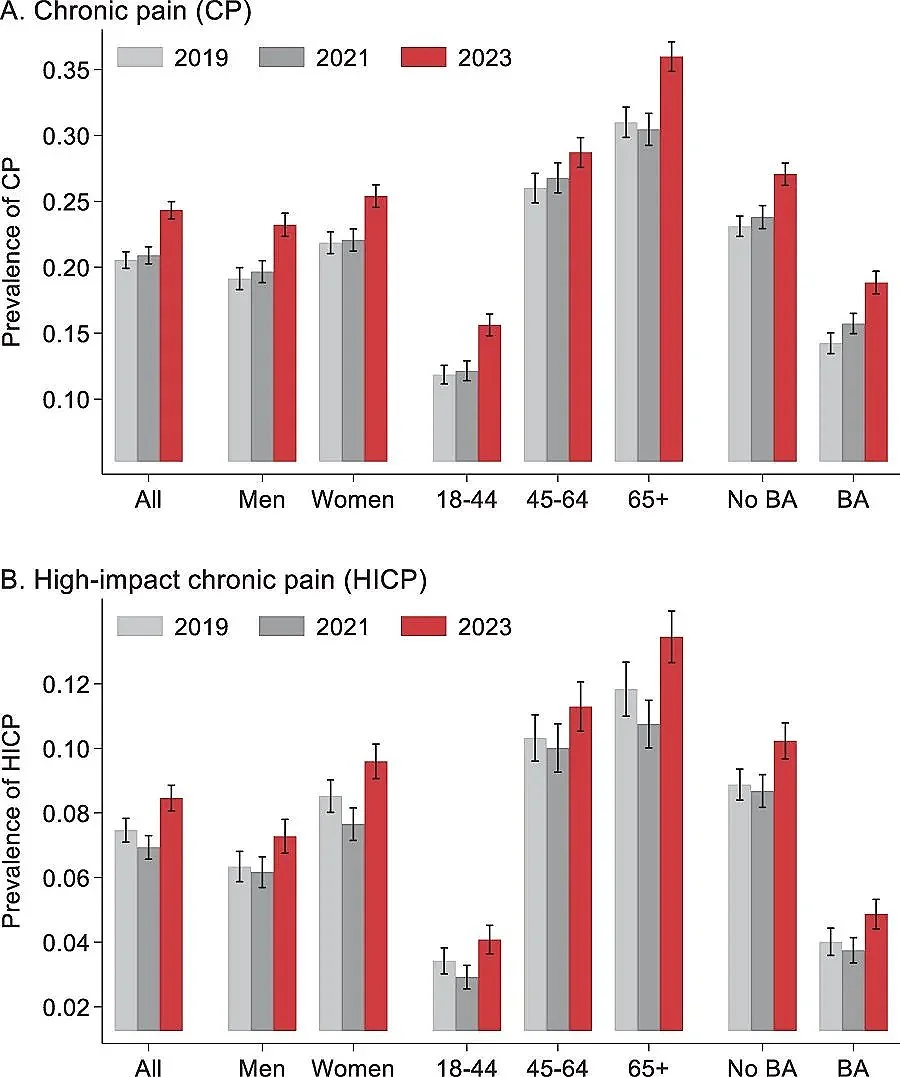
In 2019, about 20.5% of Americans (50 million people) had chronic pain and 7.5% had high-impact pain, which is pain strong enough to limit daily life and work activity.

Pain prevalence remained stable during the pandemic, and by some measures even declined, but in 2023 the chronic pain rate surged to 24.3% of Americans, while high-impact pain rose to 8.9% of the population.

That brought the total number of people who have chronic pain to 60 million, with 21 million having high-impact pain.

“We found that chronic pain, already a widespread health problem, reached an all-time high prevalence in the post-pandemic era, necessitating urgent attention and interventions to address and alleviate this growing health crisis,” wrote co-authors Anna Zajacova, PhD, at Western University in Ontario and Hanna Grol-Prokopczyk, PhD, at the University of Buffalo..

The study is based on results from the 2019, 2021 and 2023 National Health Interview Surveys (NHIS), a federal survey conducted every two years. A preprint of the study was released last year and has now been published in the peer-reviewed journal PAIN.

The 2023 surge in pain was observed in all age, gender, racial/ethnic groups, education levels, and in both rural and urban areas.

Pain increased in almost all body areas, including the back and neck; arms, shoulders and hands; hip, knees and feet; headache or migraine; and in the abdominal, pelvic, and genital areas. The lone area where pain declined was in the jaw or teeth.

Why did pain increase after the pandemic, but not during the pandemic — when people saw doctors less often and postponed or cancelled many health procedures?

One possible explanation is that Covid relief payments, expanded unemployment benefits, and eviction moratoriums eased financial stress.

Working from home and commuting less also lessened physical demands, while giving remote workers more opportunities for self-care.

PAIN journal

“The big question is why we saw this substantial increase in pain prevalence after the pandemic. We examined the role of long COVID and found that it explained about 13% of the increase,” said Grol-Prokopczyk. “None of the other measures we examined — including changes in income or physical health conditions — explained the increase.

“We speculate that abrupt termination of pandemic-era policies, such as remote work arrangements and expanded unemployment benefits, may have played a role.”

In addition to long Covid, researchers also noted an uptick in rates of health conditions that can cause pain, such as arthritis, cancer, cardiovascular disease, diabetes, depression, and anxiety.

The finding of an increase in pain rates conflicts with an FDA analysis that predicted the “medical need” for hydrocodone, oxycodone and other pain relieving Schedule II opioids would decline by 5.3% in 2023. The FDA also predicted a 7.4% decline in the medical use of opioids in 2024 and a 6.6% decline in 2025.

Those FDA projections are important because they are used by the DEA to establish annual production quotas for opioids, which have fallen for nine consecutive years. Since 2015, the DEA has reduced the supply of oxycodone by 68% and hydrocodone by 73%.

When short-term, acute pain is poorly treated, it can have long-term consequences for patients who may transition to chronic pain. Healthcare visits for non–Covid health issues declined dramatically in 2020 and 2021, particularly at hospitals and emergency departments, which are often the first site of care for acute pain management.

Researchers say the lack of adequate and timely pain management during the pandemic may have contributed to more people having chronic pain and high-impact pain in 2023.

“These findings highlight the importance of expanded epidemiological and clinical research on chronic pain to better understand population-level drivers of pain, and to improve national pain prevention and treatment efforts for the many Americans at risk of or affected by pain,” said Grol-Prokopczyk.

Moral Panic Over Herbal Drink Stirs Anti-Kratom Hysteria

By Crystal Lindell 

Last month, a TikTok influencer who goes by the name “YourBestieMisha” posted a video claiming that he was harassed at a Texas gas station by a teenager craving for a drink called “Feel Free.” 

The drink, which is sold in little blue bottles, is made by Oklahoma-based Botanic Tonics. It’s infused with kava root, natural leaf kratom, and other herbs. 

In the video, Michael “Misha” Brown alleges that as he was going into the gas station, he was approached by a "child" who seemed to be about 14 years old.

In Texas, you have to be at least 18 to buy kratom, so when the teen asked Brown to help him get Feel Free, Brown said no. That’s when the teen lunged for his wallet, which Brown says he was able to pull away from the boy. 

Brown then went into the gas station and shared what happened with the clerk, who told him Feel Free is so addictive that people are coming in five or six times a day to purchase a bottle.

“So I get home and look into this and people are literally going to rehab over this drink that is legal in most states in the U.S. and is sold in gas stations,” Brown says in the video. “I don't think we talk enough about things that are legal but are sold next to gum and energy drinks.”

The video has amassed more than 23 million views. However, there does not appear to be any follow-up videos posted by Brown elaborating on his story, or providing any evidence that any of it actually happened. 

MICHAEL “MISHA” BROWN (TIKTOK VIDEO)

In fact, the video has all the classic hallmarks of a “moral panic” story, which is an exaggerated fear or anxiety about something that is fueled by media attention or a video going “viral” online. In this case, there’s the implied harm to a child, no way to verify any of it, and an incentive for the creator to embellish and exaggerate his claims. 

Brown, who is an aspiring actor and singer, has posted thousands of videos online and has over three million followers on TikTok. He also has a podcast and is working on a book. Like other social media influencers, Brown’s income comes from advertising revenue, which is based on the number of views his videos get.

Even if his gas station story actually happened, there’s still a lot to unpack. 

Aside from the fact that children can already purchase excessive amounts of caffeine all on their own, both cigarettes and alcohol are also “things that are legal,” and are sold right next to gum and energy drinks in gas stations across the country. 

The makers of Feel Free have already self-imposed an age restriction for customers to be 21 and older. So if the teen in Brown’s story was hooked on Feel Free, then an adult was helping him get it long before the run-in at the gas station. 

And yes, that is a problem, just like it would be a problem if an adult was buying vodka for a 14-year-old. However, most will agree that doesn’t mean vodka should be illegal for adults.

Videos like Brown’s are concerning because they have the potential to spark real policy debates and hysteria from people who know nothing about kratom, a dietary supplement used by millions for pain relief or as an energy booster. 

The safety of kratom became a hot topic again when the FDA recently announced plans to make the kratom alkaloid 7-hydroxymitragynine (7-OH) an illegal Schedule One controlled substance. 7-OH occurs naturally in kratom in trace amounts, but some kratom vendors sell a concentrated, synthetic version of 7-OH to boost its potency.

Although Feel Free contains very little 7-OH, many media stories have conflated the two, implying the drink has “opioid-like effects” and is “hooking young people.”

In 2023, a class action lawsuit was filed against Botanic Tonics, alleging that Feel Free was misleadingly advertised as a healthy alternative to alcohol. The company settled the case for $8.75 million and agreed to put stronger safety warnings on its products.

Botanic Tonics responded to this latest uproar by trying to differentiate Feel Free from 7-OH, and “applauding” the FDA for its move. 

"Our products contain trace amounts of 7-OH that occur naturally during the traditional drying process — levels that are dramatically different from the concentrated synthetic products now under FDA scrutiny," said Cameron Korehbandi, CEO of Botanic Tonics. "The difference between natural leaf kratom and synthetic 7-OH concentrates represents a night and day distinction in terms of safety and consumer protection."

In my opinion, this was a huge mistake for Botanic Tonics. While it’s tempting to think it can keep Feel Free legal by appeasing the FDA, it’s already become clear that the moral panic around 7-OH is spreading to all kratom products

As such, Botanic Tonics should unite with kratom users to ensure that 7-OH continues to be sold the same way nicotine, alcohol, caffeine, and kratom leaf already are: over the counter and with age restrictions. 

If the FDA succeeds in making 7-OH a Schedule One controlled substance, it won’t be long until they come after kratom leaf as well.

FDA’s 7-OH Warning Sparks Sensational Claims About Kratom

By Pat Anson

The FDA’s latest campaign against kratom has reignited a wave of sensational claims in the media about the herbal supplement and its potential for addiction.

“A new emergency is quietly growing in the United States,” warns La Voce di New York, with an ominous but corny headline that calls kratom a new “Hippie Drug” disguised as an alternative to coffee.

“However, the preparation hides a high potential for addiction, with symptoms and withdrawal crises very similar to those caused by the most dangerous opioids.”

USA Today said it spoke with over 20 people who became “severely addicted” to kratom. One of them was Kim Maloney, a 49-year-old Ohio mother, who lost her car, home and marriage when her kratom use spun out of control. She believes it would have killed her, had she not gone into rehab.

"My eyes were rolling in the back of my head. I couldn't walk straight. I didn't leave my couch for months. I had pancreatitis. I had shingles. I was sick. I mean, I was really sick,” Maloney said.

Other news outlets are calling kratom “gas station heroin” and “legal morphine,” taking their cue from FDA Commissioner Marty Makary, MD, who recently announced plans to have a kratom alkaloid called 7-hydroxymitragynine (7-OH) classified as a Schedule One controlled substance --- the same category as heroin and LSD.

“7-OH is an opioid that can be more potent than morphine. We need regulation and public education to prevent another wave of the opioid epidemic,” said Makary.

‘Replacing One Addiction with Another’

The FDA’s renewed interest in kratom — and 7-OH in particular — apparently stems from a growing number of social media posts about it being addictive. A Reddit page created last year for people trying to quit 7-OH has over 4,000 members.

“You will have a passionate love affair with 7OH before it shows its true colors,” warns one former user. “Like many, I was a recovered kratom user before trying 7OH. And for the better part of a year, it felt like 7OH was a miracle drug that fixed all the negative side-effects of plain leaf kratom. IT'S NOT.”

Nicholas Campana, a recovering addict and YouTube influencer who goes by the name "Goblin," posted a video a few months ago calling 7-OH the “most dangerous drug in the smoke shop.”

“While kratom is a legitimate step down from opiates, in my opinion this is replacing one addiction with another,” Campana said in the video, which has been viewed over 700,000 times. "7-OH is the latest smoke shop craze. It’s not like the other ones, because this a very, very addictive opioid.”

For the record, neither kratom or 7-OH are opioids. They do not come from poppies. Kratom leaves come from Mitragyna speciosa, a tropical tree native to southeast Asia that belongs to the same botanical family as coffee.

Kratom does have opioid-like effects, however, and 7-OH is one of its active ingredients. In its natural state, only trace amounts of 7-OH are present in kratom. But some kratom vendors are selling gummies, drinks and tablets with concentrated synthetic versions of 7-OH to boost their potency.

‘Works as Well as Oxycodone’

According to one study, as many as two million Americans use kratom. Most take it for pain relief or as an energy booster, and have only been exposed to unadulterated kratom leaf products. Some chronic pain sufferers have tried 7-OH and found it just as effective as prescription opioids.

One of them is Emil, who suffers from chronic pancreatitis. Like many other pain patients, Emil has faced frustrating delays getting his opioid prescriptions filled. He asked that we not use his last name.

“I have had good experiences with 7-OH, using it primarily when I am waiting for a new prescription from my doctor since that can take over a week from the time I request it to getting it filled by the pharmacy, sometimes even longer,” Emil told PNN. ““It does not seem to cause the tiredness and aloofness, for lack of a better word, that prescription painkillers can cause and I feel like I am able to focus better, with less of the unpleasant side effects of painkillers such as nausea, dry mouth, etc. 

“I am prescribed oxycodone for pain and while it is somewhat effective in combination with ibuprofen in treating my pain, it is a constant struggle to keep my pain under control.  I would say that 7-OH works just about as well as oxycodone in controlling the pain, but definitely with less unpleasant side effects and really no so-called withdrawal symptoms or cravings, at least for me, as some people report with prescription painkillers. I truly do not understand why they are trying to ban it outright as a Schedule I substance with no medical use.”

The FDA has offered surprisingly little evidence about the harmful effects of 7-OH or why it is again trying to classify it as a Schedule One controlled substance. The FDA’s Adverse Event Reporting System has recorded only 15 cases involving 7-OH, two of them deaths, but because of “ambiguity about the contributory role of 7-OH” — which suggests other drugs were involved — the agency is downplaying the significance of those cases.

“This raises serious questions about the evidentiary basis for such a significant regulatory action,” Jeff Smith, PhD, national policy director for the Holistic Alternative Recovery Trust, wrote in an op/ed published in Medical Economics. “More research is needed to fully assess 7-OH’s risks, including its potential for misuse, dependence or drug-drug interactions. But they do not support the claim that 7-OH is an imminent threat to public health.

“To be clear, 7-OH is a potent compound. But potency alone does not justify prohibition. Alcohol, benzodiazepines and prescription opioids are far more dangerous and remain legally available under strict regulation. The proper response to uncertainty is research and oversight: not bans.”

‘Embarassing FDA Mistakes’

Kratom supporters and those who want access to 7-OH can take comfort in the FDA’s failure to get kratom banned in previous attempts.

In 2016, the Drug Enforcement Administration – acting at the request of the FDA – tried to classify 7-OH and the kratom alkaloid mitragynine as Schedule One drugs, only to drop those efforts after a public outcry. A top federal health official later said the FDA withdrew its scheduling request because of “embarrassingly poor evidence & data.”

In 2024, the FDA made another preliminary attempt at regulating kratom, publishing a notice in the Federal Register seeking public comment on a proposed survey of kratom users to evaluate 7-OH and mitragynine for potential harms. Ten days later, the FDA abruptly withdrew its study plans, citing unexplained “circumstances necessitating changes.”

Kratom advocates at the time said the FDA’s withdrawal of the study notice was the “latest embarrassing mistake” the agency made about kratom.

“The FDA’s few anti-kratom staff are repeatedly undermining the Agency’s credibility on harm reduction strategies,” said Mac Haddow, Senior Fellow on Public Policy at the American Kratom Association (AKA), an association of kratom vendors. “The FDA remains trapped in the web of their own making that unfairly demonizes products like kratom.”

The AKA has since changed its tune, and is now applauding the FDA for its “decisive and science-driven recommendation to classify 7-hydroxymitragynine (7-OH) as a Schedule I substance.”

“These 7-OH products are not kratom. They are chemically altered substances that carry potent opioid-like effects and pose an imminent threat to consumers,” Haddow said in a new statement.

It’s up to the DEA to decide if 7-OH should be classified as a controlled substance. If it does, the DEA must then publish a notice in the Federal Register, take public comments and reevaluate the evidence, a rulemaking process that could take months or even years. Until then, 7-OH can legally remain on the market under federal law as an unregulated dietary supplement, as long as no medical claims are made about it.

(Update 8/13/25: Florida isn’t waiting for the DEA or FDA to act. Florida Attorney General James Uthmeier has filed an emergency rule classifying concentrated forms of 7-OH as a Schedule One controlled substance in Florida. The rule makes it illegal to sell, possess or distribute concentrated forms of 7-OH in the state, calling them “an immediate and imminent hazard to the public health, safety, and welfare.”)

FDA Wants 7-OH Kratom Derivative Classified as Illegal Drug

By Crystal Lindell

The U.S. Food and Drug Administration is taking the initial steps to make the kratom derivative 7-OH an illegal Schedule One controlled substance – a classification that would put it in the same category as heroin. 

The FDA announced its plan this week, saying it was targeting 7-hydroxymitragynine (7-OH), an alkaloid that occurs naturally in kratom in trace amounts. Some kratom vendors are selling concentrated synthetic versions of 7-OH to boost its potency as a pain reliever and mood enhancer.

The FDA claims it is “not focused on natural kratom leaf products,” but in a report released as part of the announcement, the agency said it still “has concerns about the safety of kratom products more broadly."

The FDA said it is focused on 7-OH for now "because it is a substance with potent mu opioid agonist properties and significant abuse liability." The agency recently warned 7 companies to stop selling kratom products with concentrated levels of 7-OH.

“Vape stores are popping up in every neighborhood in America, and many are selling addictive products like concentrated 7-OH. After the last wave of the opioid epidemic, we cannot get caught flat-footed again,” said FDA Commissioner Marty Makary, MD.

“7-OH is an opioid that can be more potent than morphine. We need regulation and public education to prevent another wave of the opioid epidemic.”

To be clear, neither kratom or 7-OH are derived from poppy plants and they are not opioids. Kratom leaves come from Mitragyna speciosa, a tropical tree native to southeast Asia that belongs in the same botanical family as coffee

But because 7-OH acts on opioid receptors in the brain, the FDA claims it is essentially an opioid, a questionable argument the agency has also made about kratom itself. If that were true, you could say nicotine, caffeine, and even cow’s milk are opioids, because they also bind to opioid receptors. 

Curiously, the FDA’s news release did not mention any cases of someone overdosing on 7-OH or being harmed by it – even though the agency’s Adverse Event Reporting System has recorded two deaths and 13 other cases involving 7-OH. However, because of “ambiguity about the contributory role of 7-OH,” the FDA is downplaying the significance of those adverse events.

The only justification offered by the FDA for why 7-OH needs to be classified as a Schedule One controlled substance is the assertion that it is “increasingly recognized as having potential for abuse.” 

Jeff Smith, national policy director at Holistic Alternative Recovery Trust, a kratom advocacy group, told The New York Times the FDA has no data to support taking emergency action on 7-OH.

“If 7-OH posed the kind of urgent danger that would justify emergency action, evidence would have been presented,” Smith said. “It was not.”

Kirsten Elin Smith, a Johns Hopkins University assistant professor who studies kratom, told The Times that she was initially very concerned about 7-OH when it began showing up in kratom products. She has since changed her perspective. 

“If you had asked me a year ago, I would have said this is evil,” Smith said. “At this point I’m a little more equivocal."

The announcement from the FDA is only the first step in what can be a long process for classifying a substance under the Controlled Substances Act. The move requires the Drug Enforcement Administration to publish a notice in the Federal Register, present its evidence, and then allow for a public comment period.  

The DEA tried that with kratom in 2016, at the request of the FDA, but then backed down after a public outcry and opposition from Congress. A top federal health official later said the FDA's scheduling request was based on “embarrassingly poor evidence & data.”

FDA Warns Alkaloid in Kratom Extracts ‘May Be Dangerous’

By Pat Anson

The Food and Drug Administration is cracking down again on the kratom industry, by sending warning letters to 7 kratom vendors about illegally marketing a dietary supplement.

At issue is an alkaloid in kratom called 7-hydroxymitragynine -- known as 7-OH -- which relieves pain, improves mood, increases energy, and has opioid-like properties. 7-OH occurs naturally in kratom, but is present in only trace amounts.

Too boost its potency, some vendors are selling kratom gummies, tablets and extracts with concentrated levels of 7-OH, which the FDA says “may be dangerous.”

“7-OH is not lawful in dietary supplements and cannot be lawfully added to conventional foods. Additionally, there are no FDA-approved drugs containing 7-OH, and it is illegal to market any drugs containing 7-OH. Consumers who use 7-OH products are exposing themselves to products that have not been proven safe or effective for any use,” the agency said in a press release.         

Warning letters were sent this month to Shaman Botanicals, My Smoke Wholesale, Relax Relief Rejuvenate Trading, Thang Botanicals, Royal Diamond Imports, Hydroxie, and 7Tabz Retail. The companies were given 15 business days to respond or take corrective action.

While some of the vendors have removed 7-OH products from their websites, others continue to sell them. Hydroxie, for example, still accepts orders for chewable tablets containing up to 30mg of 7-OH on its website. There are no explicit warnings about the tablets on the webpages where they are advertised, but Hydroxie cautions consumers about 7-OH on its “Warnings” page.     

“This product contains concentrated alkaloids. The potency is significantly greater than raw leaf,” Hydroxie says. “Levels of 7-OH in these tablets are extremely concentrated. Do not use this product without first consulting a doctor about this alkaloid to ensure it is safe for you.”

Kratom has been used for centuries in southeast Asia as a natural stimulant and pain reliever, but only in the past decade has it become widely used in the United States — over the objections of the FDA, which tried unsuccessfully to ban kratom by listing it as a controlled substance.

It’s rare for someone to have an adverse reaction to natural kratom leaf, but people who consume concentrated extracts have been hospitalized or experienced overdoses.

Recently, former CDC Commissioner Robert Redfield, MD, called for kratom products containing elevated levels of 7-OH to be taken off the market.

“What we’re seeing with the compound 7-hydroxymitragynine is a textbook case of how manufacturers exploit regulatory gaps to create products that are, in essence, unregulated pharmaceuticals,” Redfield said.

“To put this in perspective: natural kratom contains less than 0.01 percent 7-hydroxymitragynine. These synthetic products contain concentrations up to 150 times higher. This is not botanical kratom — this is pharmaceutical-grade opioid chemistry operating without oversight.”

Two deaths and three other serious cases involving 7-OH mitragynine have been reported on the FDA’s Adverse Events Reporting System since 2023.  Of the three adverse events reported so far in 2025, one was considered life threatening. Another case resulted in a person being hospitalized. No other details are available.

When used cautiously, kratom advocates say 7-OH is a highly effective pain reliever and safer alternative to opioid medication.

“7-OH can be an invaluable harm reduction tool that should remain an option for the hundreds of thousands of consumers that rely on it,” the Holistic Alterative Recovery Trust (HART) said in a statement.

“HART strongly supports robust regulation and is pursuing legislation federally, and in the states, to mandate that all 7-OH products are manufactured safely, are marketed transparently, and are kept out of the hands of children.”    

Will FDA’s New Review Process Sell Drug Approvals to the Highest Bidder? 

By Crystal Lindell

The U.S. Food and Drug Administration has launched a new speedy review process for new medications, dubbed the Commissioner’s National Priority Voucher (CNPV) program. 

The FDA claims the program will speed up the approval process for pharmaceutical companies looking to get a new drug on the market – but it remains unclear whether it is based on a need for the drug, its effectiveness, or how much companies are willing to pay for the privilege of early approval..

The FDA said the CNPV program will shorten the review time to 1-2 months, compared to the typical 10-12 months it usually takes after a company’s final drug application.

They’ll accomplish this by allowing for a “team-based review.” This differs from the current process, where a drug application is “sent to numerous FDA offices” to give them a chance to weigh-in.

The program will even allow companies to submit the lion’s share of the drug application before a clinical trial is complete, according to FDA Commissioner Marty Makary, MD.

“Using a common-sense approach, the national priority review program will allow companies to submit the lion’s share of the drug application before a clinical trial is complete so that we can reduce inefficiencies. The ultimate goal is to bring more cures and meaningful treatments to the American public,” Makary said. 

Neither the FDA press release about the new program or its "Frequently Asked Questions" page specify how much this new program will cost companies interested in participating. 

We can gain some frame of reference by looking at what the existing Priority Review and Priority Review Voucher costs for companies, as well as what their true value is. 

While the FDA charges companies about $2.5 million for those vouchers, according to the General Accounting Office (GAO) they have been resold on the secondary market for as much as $350 million. The GAO found that of the 31 vouchers awarded by the FDA between 2009 and 2019, over half (17) were sold to another drug company.

The new vouchers cannot be transferred to other companies as of now, but with so much money at stake, you have to wonder if there will be a valuable aftermarket for them.

Even if the new vouchers themselves are reasonably priced, my guess is that they will be more likely to go to companies that donate money to elected officials or are politically favored. 

The FDA says that in the first year of the program it will give a limited number of vouchers to companies “aligned with U.S. national priorities,” which include “unmet public health needs” and increased domestic drug manufacturing. But then they also say the vouchers “can be applied to drugs in any area of medicine.”

In other words, basically any medication would qualify. There’s not much else to explain just how vague the criteria is for receiving the vouchers.  

And if any medication would qualify for the new vouchers, it makes sense that the ultimate qualification would be what companies are willing to pay to get them. 

Under the current voucher system, the GAO found there is “no obligation to make the approved drug available at an affordable price,” so companies are free to limit access and charge whatever they want. The new voucher system also has no requirement that new drugs will be affordable or accessible. 

While I do understand the need for more efficiencies in the drug review process, when those efficiencies are applied unevenly, it inevitably invites corruption. And the last thing we need when it comes to prescription medications and healthcare in our country is more corruption. 

My concern is that the drugs getting speedy review won’t actually be the ones that are in the public’s best interests, but rather the ones that best serve the interests of our elected officials and the drug companies themselves. 

And when it comes to prescription medications, we all know that what’s best for politicians and the pharmaceutical industry is not what’s best for patients.

Former CDC Commissioner: Kratom Has ‘Low Abuse Potential’

By Pat Anson

The U.S. Food and Drug Administration has a conflicted and contentious history with kratom, the herbal supplement used by millions of Americans to self-treat their pain, anxiety, and depression.  

Kratom has been used for centuries in southeast Asia as a natural stimulant and pain reliever, but only in the past decade has it become widely available in the United States -- over the strong objections of the FDA.

In 2016, the FDA joined with the DEA in proposing that kratom be classified as an illegal Schedule I controlled substance due to its abuse potential, a request that was later withdrawn due to a public outcry.

That setback didn’t stop then-FDA Commissioner Scott Gottlieb, MD, from launching a public relations campaign demonizing and mischaracterizing kratom as an addictive “opioid.” Gottlieb cited FDA research that an Assistant Secretary for Health later called “embarrassingly poor evidence & data.”

To improved its data, last year the FDA said it would conduct a new study on the risks and safety of kratom, and then abruptly cancelled it without explanation, claiming kratom has a “chemical affinity” with opioids and should not be used to treat medical conditions. “The use of this substance, that has yet to be tested and determined safe for use in human population by the Agency, is a significant concern,” the FDA said.

The claim that kratom “has yet to be tested and determined safe” is misleading, because the FDA had just completed a pilot study showing that kratom is relatively safe, even at doses as high as 12 grams -- the equivalent of taking 24 capsules of kratom leaf powder within five minutes.   

“In 2024, the FDA completed a single ascending-dose clinical trial examining ground kratom leaf in experienced users. The results were illuminating: participants experienced no serious adverse events at doses up to 12 grams, with side effects limited to mild nausea and pupil constriction. Crucially, subjective ‘drug liking’ scores never reached statistical significance compared to placebo, indicating low abuse potential for natural leaf,” former CDC Commissioner Robert Redfield, MD, said in an op/ed published today in The Hill.

Redfield’s comment is notable, because the FDA itself has never had much to say about its 2024 study and still hasn’t posted the final results. According to the American Kratom Association, FDA researchers were "profoundly disappointed” at the lack of adverse events associated with kratom, as that doesn’t square with the agency’s long-held public position on kratom.

Redfield may be reassured of the safety of natural kratom, but he thinks the federal government should take emergency action to ban the import and sale of synthetic kratom extracts, which have elevated levels of 7-hydroxymitragynine, an alkaloiid that is present in only minute amounts in the natural leaf. Kratom extracts have been associated with serious adverse events and overdoses.  

Redfield says synthetic kratom has “pharmaceutical-grade opioid chemistry” and should be taken off the market immediately. But he thinks natural kratom is relatively safe, and cites the 2024 study as evidence.

“This clinical evidence establishes a critical scientific baseline: natural kratom leaf, when used as it has been for centuries, presents a markedly different risk profile than the synthetic products flooding American markets,” Redfield wrote. “This is not about banning kratom. Full spectrum kratom, used responsibly, appears to have acceptable safety margins based on FDA’s own clinical data. This is about preventing synthetic opioids from hiding behind botanical names.”

The FDA still has “serious safety concerns” about natural kratom, but has little evidence to back them up and is apparently slow-walking research. Only two federally-funded kratom studies are currently recruiting participants. One would study the effects of natural kratom and the potential for withdrawal, while the second trial would study the effects of kratom extracts.

Both studies are small and won’t be completed until 2028 —- over a decade after the agency tried to get kratom banned nationwide.

Meloxicam Almost Killed My Mom, Now FDA Has Approved an IV Version

By Crystal Lindell

Buried in the fine print for the newest non-opioid pain medication to be approved by the FDA is a stark warning that hits close to home. 

The FDA just approved Xifyrm, which is the branded IV version of the non-steroidal anti-inflammatory drug meloxicam for adults with moderate-to-severe pain.

It offers once daily dosing, and of course, manufacturer Azurity Pharmaceuticals highlights the fact that "Xifyrm provides a non-opioid analgesic" in its press release about the drug. 

There’s just one problem: it’s the same drug that almost killed my mom in 2022. 

If you look at the fine print in the prescribing information, you’ll see the disclaimer that points to one of the major risks that come with this medication. 

"NSAIDs, including meloxicam, can cause serious gastrointestinal (GI) adverse events including inflammation, bleeding, ulceration, and perforation of the esophagus, stomach, small intestine, or large intestine, which can be fatal,” Azurity warns.

They go on to say that these serious adverse events “can occur at any time, with or without warning symptoms.”

And 4 out 5 patients who develop these complications have no warning signs at all. 

Azurity then shares how common these complications are, writing that they occur in “1% of patients treated for 3-6 months, and in about 2-4% of patients treated for one year.”

They also add that “even short-term NSAID therapy is not without risk.”

Unfortunately, my mom was in the group of 2-4% of patients who were treated with mexlicam for one year and then had serious complications. 

Her doctor gave her the oral version for chronic hip pain because he didn’t want to give her opioids. She took it exactly as prescribed, and about one year later, meloxicam almost killed her. 

She had a very sudden and very serious perforated ulcer. 

My mom had no warning symptoms, just as the fine print for Xifyrm warns can happen. She collapsed at work and then was taken to the emergency room via ambulance. There, her sudden intense stomach pain was dismissed by staff for 9 hours before she finally got a CT scan. She was then immediately rushed into emergency surgery for a perforated ulcer. 

My mom spent the next week in critical care, unable to eat or drink anything at all for a full week while her stomach healed. 

It was a harrowing experience made worse by the fact that all of this happened during the height of the COVID lockdown, meaning none of us were able to visit her at all while she was in the hospital. 

And the thing is, she is one of the lucky ones, because she survived. 

We often hear harrowing tales of opioids causing overdose deaths, but that doesn’t mean that alternatives like NSAIDs are safe. The fact that 2-4% of patients could have a potentially fatal complication from this drug should scare both doctors and patients. 

Many doctors hesitate to prescribe opioid pain medications these days, even for post-surgical and cancer pain, and my fear is that this new IV version of meloxicam will quickly become one of their favorite alternatives, just as the oral version already is. 

Interestingly, the FDA recently released a boxed warning for veterinarians on the use of meloxicam in cats before surgery, saying repeated off-label use can cause sudden kidney failure and even death. 

When it comes to humans, it’s also noteworthy that Azuirty also makes it clear that this new IV medication shouldn’t be used alone when rapid pain relief is needed. That allows for the potential use of opioids, but I’m skeptical that doctors will heed that advice. 

A lot of doctors have an “avoid opioids at all costs” approach to pain care these days, but many of them have not reckoned with what that can actually mean for patients. They also rarely go over the true risks of NSAIDs with their patients, despite the fact that lectures about the dangers of opioids are common in medical care. 

These days, my mom is in good health, and in fact we just celebrated her 64th birthday. It’s a milestone that’s now all the more precious after we almost lost her.

I would urge doctors to exercise extreme caution when turning to opioid alternatives like Xifyrm, and other NSAIDs. They are not without risk. And in fact, they can be more dangerous than opioids. 

FDA Warns Again About ‘Gas Station Heroin’

By Pat Anson

The Food and Drug Administration is once again warning Americans about the harmful effects of tianeptine, an antidepressant found in supplements sold online and in convenience stores to help with energy, mood, pain and sexual performance.

Tianeptine is essentially an unregulated drug in the United States. It is not currently scheduled under the Controlled Substances Act, but is also not approved by the FDA for any medical use. It is, however, approved in low doses as a treatment for depression and anxiety in several European, Asian and Latin American counties.

The problem in the U.S. is that tianeptine is being sold in supplements without a prescription at doses up to 250 times higher than what is typically recommended in foreign drug products. At high doses, tianeptine can cause confusion, agitation and euphoria – which has led some to call it “gas station heroin.”

“I am very concerned. I want the public to be especially aware of this dangerous product and the serious and continuing risk it poses to America’s youth,” FDA Commissioner Dr. Martin Makary said in a “Dear Colleagues” letter to healthcare professionals.

“While the FDA is closely following the distribution and sale of these products, it is critical that you appreciate the magnitude of the underlying danger of these products, and disseminate information about it.”

This isn’t the first time the FDA has warned about tianeptine. In 2023, the agency warned consumers not to purchase or consume tianeptine products sold under the brand name Neptune’s Fix, which it blamed for “severe adverse events” such as seizures and loss of consciousness. A few months later, the FDA sent a warning letter to retailers telling them to stop selling Neptune’s Fix and any other products containing tianeptine.

Makary’s letter does not make clear why another warning about tianeptine is needed. It implies the drug is increasingly used by young people, but provides no statistics or examples of it harming users.

Since 2023, the FDA’s Adverse Events Reporting System has recorded less than a hundred cases of adverse health events involving tianeptine, most of them involving “persistent genital arousal disorder.”

Like other antidepressants, tianeptine can be used to relieve pain. A 2023 study on laboratory mice found tianeptine to be a fast-acting pain reliever, with low risk of addiction.

“We hope this revives the potential of using tianeptine for the treatment of chronic pain and associated conditions, such as anxiety and depression,” said lead author Venetia Zachariou, PhD, Chair of Pharmacology at Boston University’s School of Medicine. “By further refining this molecule, we could arrive at a pain treatment that is more effective, fast acting, and has a mild side effect profile.”

Other studies have show tianeptine may be effective as a treatment for asthma, irritable bowel syndrome, fibromyalgia, and ADHD. Like any drug, however, tianeptine can be harmful when its abused, taken in high doses, or combined with other drugs.

“Tianeptine is often taken recreationally, but it has also been used to self-treat a variety of ailments. It is frequently used chronically and, if stopped abruptly, users may experience withdrawal symptoms,” Makary said in his letter. “Historically, there has been a delayed recognition of fast-growing trends, such as opioid abuse and vaping addiction in youth. Let’s be proactive in understanding and addressing the use of tianeptine products.”

Experimental Cannabis Extract Has ‘Potential to Replace Opiates’

By Pat Anson

A German biotech company says it is seeking regulatory approval in Europe and the United States for an experimental cannabis extract that could be an alternative to opioid pain medication.

Vertanical recently completed two Phase 3 studies of its new drug – called VER-01 – on over 1,000 patients with chronic low back pain who didn’t get sufficient relief from non-opioid analgesics.

One study compared VER-01 to a placebo, while the second trial compared the drug’s safety and tolerability to patients treated with opioids. The company told The Times it was awaiting publication of the studies’ findings in The Lancet before making them public.

“VER-01 reduces pain without creating dependency or having an abuse potential,” said Clemens Fischer, MD, Vertanical’s CEO. “It has the full potential to replace opiates as it’s more effective. It’s a real alternative for chronic patients — the first one.

“Pain patients around the world are trapped in a vicious cycle of pain, insomnia, limited mobility, and depression. VER-01 has the potential to successfully break this cycle.”

VER-01 is a “full-spectrum” extract derived from cannabis sativa leaves and flowers. Although it contains THC, the main psychoactive substance in cannabis, Fischer says patients enrolled in the studies didn’t become high or intoxicated. About 25 percent did “feel a bit dizzy” for two weeks after they started taking it.

Participants also didn’t get “the munchies” or gain weight, a well-known side effect of cannabis.

“We were looking very carefully, because that’s what we hear from cannabis smokers — that the appetite increases as well their weight. But we haven’t seen any increase in weight,” Fischer told The Times.

Vertanical is seeking regulatory approval of VER-01 in Europe and with the UK’s Medicines and Healthcare Products Regulatory Agency. If granted, VER-01 would be the first cannabis-based medicine approved for chronic pain. It would be sold under the brand name Exilby and be taken orally in drops.

The timeline for approval in Europe may be as soon as this summer, but it’s likely to take longer in the U.S.

“We are seeking regulatory approval in the US and are in talks with the FDA. For approval in the US, a further phase 3 study with US patients in the indication of chronic low back pain will start in Q2 2025,” Merit Renner, Senior Manager of Business Development at Vertanical, told PNN in an email. “This, together with the phase 3 study successfully conducted in Europe, will form the basis for approval in the US.”

Vertanical also plans further studies of VER-01 on patients with osteoarthritis and peripheral neuropathy.

Research into the pain-relieving properties of cannabis has been slow in the U.S., in large part because of marijuana’s status as a Schedule 1 Controlled Substance, the same classification as LSD and heroin. The DEA recently allowed more marijuana to be used for research purposes, but has dragged its feet about reclassifying marijuana as a Schedule 3 substance that could be used for medical purposes. Until marijuana is rescheduled, VER-01 is unlikely to get FDA approval.

Some recent studies have shown that certain cannabinoids found in marijuana -- cannabidiol (CBD), cannabigerol (CBG), and cannabinol (CBN) – block pain signals in the peripheral nervous system, not the brain, and don’t have a psychoactive effect that could lead to abuse.

“These findings open new avenues for the development of cannabinoid-based therapies,” said Mohammad-Reza Ghovanloo, PhD, lead author of a study published in PNAS and a research scientist at Yale School of Medicine. “Our results show that CBG in particular has the strongest potential to provide effective pain relief without the risks associated with traditional treatments.”

The cannabinoids in the Yale study interact with a protein in cell membranes called Nav1.8, which blocks peripheral nerves from transmitting pain signals. Inhibiting Nav1.8 is the same method used by Journavx (suzetrigine), a non-opioid analgesic recently approved by the FDA for relieving moderate to severe acute pain in adults.

FDA Approves New Non-Opioid Pain Reliever

By Pat Anson

Despite lackluster results in clinical trials, the U.S. Food and Drug Administration has approved a new non-opioid pain reliever for moderate to severe acute pain in adults.

Journavx (suzetrigine) is the first new medication for acute, short-term pain in over two decades. Unlike opioids, Journavx blocks pain signals in the peripheral nervous system, not in the brain, so it doesn’t have the same “liking” effects of opioids, which can lead to dependence or addiction.

The FDA calls its approval “an important public health milestone.”

"A new non-opioid analgesic therapeutic class for acute pain offers an opportunity to mitigate certain risks associated with using an opioid for pain and provides patients with another treatment option. This action and the agency's designations to expedite the drug's development and review underscore FDA's commitment to approving safe and effective alternatives to opioids for pain management," said Jacqueline Corrigan-Curay, MD, acting director of the FDA's Center for Drug Evaluation and Research.

Journavx was developed by Vertex Pharmaceuticals, which anticipates the drug to be used primarily for relieving post-operative pain or trauma. It is also being studied as a treatment for diabetic peripheral neuropathy and other types of chronic pain.

“This is an incredible day for patients and physicians alike who now have an approved non-opioid treatment that delivers effective acute pain relief and a favorable safety profile without addictive potential,” said Jessica Oswald, MD, a Vertex consultant and Associate Physician in Emergency Medicine and Pain Medicine in San Diego.

“I believe Journavx could redefine the management of pain and become a foundational treatment option for people with all types of moderate-to-severe acute pain, where options aside from opioids have been so desperately needed.”

VERTEX IMAGE

The results from clinical trials suggest that Journavx is a mild pain reliever, at best.

In Phase 3 clinical studies of acute pain after minimally invasive surgeries, Journavx was no more effective than a low-dose combination of hydrocodone and acetaminophen, more commonly known as Vicodin.

In a recent Phase 2 study, Journavx was essentially no better than a placebo in relieving chronic back and hip pain caused by lumbosacral radiculopathy.

A recent report by ICER, an independent, non-profit research institute, said there were “uncertainties” about the efficacy and safety of Journavx.

“We have concerns about as-yet-unknown harms of suzetrigine as we would for any drug with a new mechanism of action; we are particularly concerned about whether there could be an increased risk for cardiac arrhythmias… and possible acute renal injury given a study in people with diabetes,” ICER said. “The above uncertainties inform our ratings that the evidence for suzetrigine for the treatment of acute pain in comparison with no systemic treatment, in comparison with opioid analgesics, and in comparison with NSAIDs are all promising but inconclusive.”

Journavx is being priced by Vertex at a wholesale cost for $15.50 per 50mg pill. When taken twice a day for acute pain, ICER estimates the cost at $420 for a one-week course. By comparison, a supply of 100 Vicodin tablets costs about $142.

The FDA’s approval of Journavx coincides with implementation of the NOPAIN Act, which makes non-opioid analgesics in outpatient surgical settings eligible for higher Medicare reimbursement rates.  

The risk of a surgery patient misusing opioids or becoming addicted is less than one percent. One study found that patients who received no opioids during surgery were more likely to have post-operative pain and require opioids during recovery.